Monday, May 20, 2019

Double Reed Dish: A Reflection


We are truly fortunate to have members of the Double Reed community who care enough about the progress of all to ask hard questions, share the tough moments, and take an honest look at the challenges we all face in a thoughtful, nurturing, and positive forum.


This post will share my reflections inspired by the Benjamin Kamins episode of Double Reed Dish which exposed several crucial points for professional reflection.


We all know exactly who Benjamin Kamins is and, while there are many ways to describe his contributions and legacy to our community, I would personally describe him as the gentle force behind one of the winning-est studios in the country currently.*  National auditions, competitions – his students win with a stunning amount of frequency.  

*Completely anecdotal statement, no actual footwork completed to prove this statement.

I have observed masterclasses led by Mr. Kamins, reed making workshops, even auditioned for his studio way back in 1999.  I've seen him perform, listened to his albums, and took advantage of an opportunity to pick his brain about DMA programs when he randomly sat next to me at a MQVC concert  He’s unfailingly kind, indefatigably positive, and intimately aware and wise regarding every aspect of this crazy bassoon career.

There were many moments in his recent interview with the Double Reed Dish that were worthy of cross-stitch and framing.  Such as this Zen proverb:

“Before enlightenment, chop wood, carry water. After enlightenment, chop wood, carry water.”

I want to focus on a few as they relate to my own much needed, mid-career catharsis.

1 - Regarding winning his first job at the age of 19, he said, “I got lucky.”

2 - Regarding his career moving forward from that point, summarizing audition wins and losses, “I still felt like a failure in my career into my mid-40’s.” 

3 – Trying to win the principal bassoon spot in the "God Philharmonic” – which he didn’t achieve – and learning instead to bloom where he had been planted in Houston. 

The honesty and perspective with which Mr. Kamins speaks is a salve to the mid-career musician soul.  It sparks reflection on subjects we don’t talk about nearly enough and no amount of mentoring ever makes easier.  The idea that you can work your entire professional life as a musician and still feel like you haven’t accomplished your dream, you haven’t gotten “there,” which Mr. Kamins was quick to declare, it doesn’t exist.  

We spend so much of our energy looking at the careers of a few great performers/pedagogues and think, I want to get “there.”  In pursuit of “there” we push ourselves through auditions, jobs, moves, endless hours of practice, reed-making, networking.  For those who “Do The Work” with discipline and consistency, a career is built along the way which, for many, may not look anything like the “there” they had imagined for themselves.

I have been really fortunate as a working musician my entire adult life even with a two year mom-sabbatical.  I have been a military musician, a salaried orchestral musician, touring chamber musician, founder and board member of a non-profit, adjunct/visiting/tenure-track professor, and, and, and…

…but I still fight that little voice that pokes at me, “Too bad you never won principal bassoon of the God Philharmonic.”

Which is one of the reasons I found myself at the Seattle Symphony associate principal audition in March.  I was sent on my way after five excerpts in the prelim round.  I haven’t advanced out of prelims since the Naples audition...whenever that was...maybe c. 2014...I mean, YEARS AGO.  My career success rate for auditions hovers around 10%.  Despite this, my transition into higher education has placed me in a position that easily provides the final resting place for me professionally.  

Woo-hoo!  Right…?

Except, this year, ensconced in my tenure process, my mind keeps running the following script over and over:

This is it!  
I’m there!  
This is it!
Woo-hoo!  
This is it!  
THIS IS IT!
This is it?  
I’m here for how many more years?  
I am going to be here for basically the next 30 years of my life?
Wait a second.
This is new.
Staying put.
Never done this before.
ENTER: doubt, second-guessing, but “what if” mind-set, plans to keep taking auditions.

4 – "While you still have the fire in the belly...and you still have the dream...you should keep going and working toward that dream." How long do you push, when do you settle down?  We really do have permission to do both, my friends!  Imagine that!    

5 - "Just do the work!  It's the only thing we have!" and I would add, find a way to have joy in that work.  You have to love the process of discovery and improvement and you absolutely have to love reed making.   

It steels the heart to hear a masterful player and teacher like Benjamin Kamins share his experiences with the doubts we all feel and the hopes to which we all hold.  

The work of learning how to live in peace and gratitude while simultaneously pushing forward to be your best self, your best bassoonist is not easy!  Many of us get folded up into the dark corners of our brains and take time away from seeing the beauty of the lives we have created.

We have been taught, explicitly and passively, that some jobs, some careers, are just better or more impressive than others.  I'm not sure this has come from a point of malice but we have all listened to bitter, cynical musicians deplore lost auditions and missed opportunities - holding to the thought that to be “there” is better than to be “here.” But let's follow Mr. Kamin's lead to teach and share a new message: celebration of the careers we DO achieve.

Thanks Double Reed Dish for creating a space for a new conversation among musicians!

Cheers for celebrating the many professional bassoonists who wake up each day to perform and teach in their communities, the local Master Bassoonists!  How fortunate we all are! May we never diminish our achievements by calling a career a failure because it looks different from the careers of others or different from what we set out to do at the inception of this journey!

Cheers for bassoon gratitude and a community that is working to tell the story of success and abundance in every corner of our bassoon world.

Saturday, February 23, 2019

Six bassoons later: what I've learned, where I'm at.


"Sometimes you do things in life just to figure out what you don't want to do in life."  - My Dad


The same principle can obviously be applied to trying bassoons in the pursuit of finding The One.  

All of the instruments I have trialed have strengths and weaknesses.  For the price you would pay for each of them, my feeling is that they are all priced quite reasonably and all sit in the $17,000 - $24,000 range.  

The Moosmann 222-CL, Leitzinger Model II, and Kronwalt are all solid instruments.  If you are in the market for a bassoon be sure to try these bassoons - they have a lot to offer!  However, they are not right for me and the goals I have set for this process.  They are also all thick wall bassoons.  

This has been the most important realization I have made during this process:  The instrument I need for the sound I desire and the type of playing I do falls within the capabilities of a "thin wall" instrument: the Yamaha 811 & 821 and the Moosmann 150E have presented as the best options for my needs.

Thin wall bassoons are typically associated or  modeled after the much sought after Heckel pre-war sound.  Not every manufacturer carries or even identifies with thin or thick wall bassoons.  Also, these identifiers are relative and vary with regard to actual measurements.  However, there are clear differences in how these instruments play - whether the manufacturer chooses to identify them as thick/thin or not.

Thin Wall vs. Thick Wall

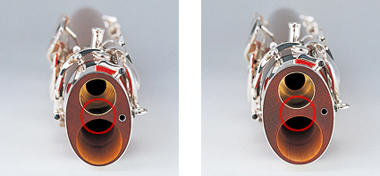
Below is a great graphic and explanation from the Yamaha website:

A bassoon with walls of regular thickness has a rich sound, with a high degree of flexibility that can easily produce sound with a soloistic, song-like and expressive quality. More power is required when playing a bassoon made with heavy, thick walls, but its sound has a uniquely solemn, dark quality, and is particularly suited to orchestral performances.
Standard wall thickness YFG-811 (left), and thick wall YFG-812 (right)


Flexibility 

What on EARTH does this word mean to bassoonists and why do we use it to describe the abilities of instruments that are very different from each other?

Flexibility of pitch

Flexibility of sound

Here is what I have learned after reading and re-reading descriptions of these instruments by the manufacturers, vendors, and players then pairing those thoughts with my own experience playing these instruments and chatting with other players as well:

Flexibility in a bassoon is the ability of the instrument to make changes in pitch with ease.  For example, in chamber music, if the player wants to match quickly to another's tendency, can the pitch be adjusted quickly and with ease.  It does not refer to the overall pitch being unstable.

Flexibility also refers to the instrument's ability to play in different timbres (bright or dark) across all ranges and dynamics.  

When you read manufacturer's descriptions they use flexibility to describe both thick and thin wall instruments.  This is partly why it's confusing to a buyer, novice or experienced.  

I think these concepts have been elusive in my own understanding because I play a Fox 601, thick wall bassoon, and I do not find it flexible in these ways.  Concepts of flexibility are foreign (even confusing) to me because I haven't experienced it in 10 years of playing on a thick wall instrument.  The thick wall models are built for power, projection - read every instrument description from every manufacturer for a thick wall instrument - and consistency (wherever it may lay, it's not budging), a bassoon built for the large orchestra.

From the Fox website, notice what word is missing from this description of the 601 model:

THE FOX MODEL 601 WAS FIRST OFFERED BY FOX PRODUCTS IN 1991. DESIGNED TO PROJECT A LARGE, DARK TONE TO MEET THE NEEDS OF SOLOISTS AND ORCHESTRAL PLAYERS, IT WAS THE FIRST FOX DESIGN WITH THICKER WALLS AND LARGER TONE HOLES. IN ADDITION, IT HAS EXTRA LENGTH IN BOTH THE BASS AND WING JOINTS TO PRODUCE AN EVEN GREATER DEPTH OF SOUND AND MORE POWERFUL LOW REGISTER.

Whereas thin wall instruments are flexible and capable of projection through clarity of tone rather than through power.  I would describe the word power as quantity and speed of air used to create volume.  They also have flexibility of pitch (from what I have now experienced) and flexibility of sound.  It's a very different approach to building and playing an instrument.  

As I reflect upon my own playing and use of a thick-wall instrument, I realize now how I landed upon a 601 as my best choice 10 years ago and why I now want something drastically different.  For a young bassoonist who wants a huge sound, the 601 (and any thick wall bassoon) is a total blast to play!  Performing with the Chinook Winds quintet, laying foundation for 4 powerhouse solo players, my 601 was fantastic!  Prior to that, playing in Army bands, free-lancing, graduate school; again, the sheer power available to me was perfection!  I listen back to all my recordings from that time period and I love what I hear.  My sound, my style of playing make sense in context.

Then everything changed...

I had a major back surgery that required my abdomen to be cut vertically for 8 inches.  My recovery was long and my playing as a result has changed.  I feel this in how I generate vibrato across all ranges, how much physical work is required to project into a hall and in the work required to create tapers that can compete with the most nuanced clarinet player.  I also recognize the physical demands required by a thick wall instrument have become more challenging simply because I'm older.  I have battled 4 back surgeries in addition to neck and shoulder issues.  

As I have moved from full-time performance into higher education, I do more solo playing now.  My quintet dynamic has also changed from full-time work with 4 young, powerhouse players.  Now playing in a university faculty quintet means very intermittent periods of rehearsal and performance - some semesters there is almost none.  The change in personalities and playing style has required me to be a very different player.  

Currently, I play principal only with a community orchestra (Idaho Falls Symphony) rather than with salaried/tenured regional orchestras (Great Falls, Billings).  This requires more delicacy and (here it comes) flexibility to blend well and provide what is needed.  I have also been playing second bassoon consistently for 3 seasons now (second to a Heckel 6000) - something I have never done before and an entirely different skill set!

All of this explains why I have easily gravitated towards the thin-wall models during this process.

There is however one caveat.  

In my last blog post, I stated the desire to have an instrument that could handle a huge sound when needed - something I felt the 6000 Heckel I played on couldn't quite deliver (of course I could be wrong).  I hear the greatest potential for this very specific ability in the Yamaha models.  The Moosmann 150E is lovely to play, so easy in the bottom octave, so stable and responsive in the top octave - really impressive!  But I also hear, and have received confirmation from my oboe colleague, that the Moosmann doesn't push out like my Fox does and it was missed in performance.

Now what?

Many thanks to Justin Miller and Midwest Musical Imports, I have been permitted to keep the Yamaha 821 and Moosmann 150EDLX for an extra long trial.  I am taking them to Seattle for a 7-day residency with Trio de Bois and a concert with the Ensign Symphony and Chorus onstage at Benaroya Hall.  This next week will reveal a lot about what these instrument can offer and how they will/will not meet the goals I have set for this process.

In addition, as I have gained even greater clarity and wisdom from this process, I am setting up trials on a few more bassoons before I make a final decision: Fox 460, Puchner 6000, maybe a Fox 680.  I am trying to find a newer Fox 201 and any and all Heckels - both are really hard to come by.  I was on the waitlist for a Benson Bell but, not surprising, it was purchased before it got to me.  

The journey continues!  Be sure to check out my YT channel for more comparison videos of instruments.  


Sunday, February 10, 2019

In the Market for a New Bassoon: First Impressions

First, I have to give a HUGE thank you to everyone who has left comments, sent messages and emails to offer insight, help, even potential instruments for sale as I have shared my videos.  THANK YOU!  I really appreciate the feedback - keep it coming!


A culmination of several events over the past 6 months has pushed me into the market for a new bassoon.  Only about 10 days into the process, I have already learned so much.  I'm always peeking at the cost of bassoons - don't we all?  And who doesn't enjoy the vendor hall play-testing at various conferences?  However, the reality of how much the market has changed since I purchased my Fox 601 in 2009 has been humbling.

Here are my initial thoughts:

  • playing a bassoon for 10 -15 minutes in a vendor hall is not how you trial a bassoon.  It's a good place to start but shouldn't be the singular litmus for a $25,000+ purchase.
  • it's concerning to me how much a person can spend on a fairly mediocre instrument. 
  • this is a highly subjective process filled with colorful adjectives, intangible concepts, and unquantifiable components of value. 
    • enlist the help of people you trust.
  • everyone has an opinion!  This isn't a bad thing.  Absorbing years of experience, wisdom, and insight from others can afford you the data needed to distillate meaningful axioms for the process.
    • it can also help you filter the dearth of well-intentioned, "I love my bassoon, so you should buy the same!"  It's deeply personal for each of us and when we fall in love, we just want others to have that same joy!
The last few days playing a Leitzinger and a Yamaha (videos to come) have allowed me to concisely articulate what I want in a new bassoon:
  • I want an instrument that keeps all the things I love about my current instrument, improve upon the shortcomings I currently struggle with, while not introducing new complications.
The result of this clarity has quickly led me to a better understanding of how and why bassoonists keep inching up their budget.  It is easy to see, at this early point, how bassoons in the $20K-$30K price range are really quite similar.  It becomes more a question of an exchange of challenges rather than a question of wholesale superiority.  

The Leitzinger and Yamaha bassoons are fine instruments but they both have concerning flaws.  They have features that would resolve some of my concerns but new ones I flat-out DO NOT want to deal with whilst breaking in a brand new bassoon.

Which reminds me: for many years I have cautioned students about buying brand new because we all know it will take at least 12 mos for the bassoon to finally start settling and opening up.  Which mean the instrument you try-and-buy will not be the instrument you end up with.  Now, if what you try-and-buy is something you immediately love, rational thought and experience dictate that most likely it will only get better.  Conversely, if there are significant concerns, who knows?  They could get better or they could simply remain. 

Back to me and my needs ("Enough about you, let's talk about me!").

What do I LOVE about my instrument:
  • apparently I love my keywork!  I didn't think it was that important to me but playing on bassoons with a few less keys, rollers, and different placement quickly made me realize that I want those details to remain on a new instrument OR I need to be prepared to pay for custom work after purchase.
    • I did this when I bought my Fox 601 with Keith Bowen and it was money well spent.  Also, really quite affordable to make changes to keywork.  
  • I like the option to play with a HUGE, full sound that doesn't start to split or just cave in on itself.
    • What does that mean?  See comment about adjectives, intangible and unquantifiable aspects of a bassoon.  All I can is that I played a gorgeous 6000 series Heckle this weekend that was absolutely marvelous but was never going to play with the huge sound that I have used on my own instrument especially in chamber and solo performances.
What specifically do I want in a "new" instrument:
  • I want stunning tapers!  No, that's not about my reeds.  My reeds can taper.  I want a taper that doesn't turn me inside out in the process.  The Leitzinger Model II has that taper - WOW!  It keeps the sound spinning without the urge to tragically cut out right before that beautiful moment when sound dissolves into silence - think: clarinet.    I want that!
  • I HAVE TO HAVE a responsive and in-tune (as much as possible) top octave.  The 6000 Heckel I had the great fortune to play this weekend had the free-est, most in tune, responsive top octave I have ever experienced.  There simply was no fight!  They spoke, they were in tune, they moved easily into the next note.
  •  Nuttty core to every note.  Capable of a full tone no matter how short you play.  This is very much the player but also very much the ability of the instrument, in my opinion.  Any master player can make almost any instrument sound pretty awesome.  But I am convinced there are also master instruments that, when paired with a master player, well, *MAGIC.*  I heard it at Meg Quigley from multiple bassoonists.  I heard it from all the teachers with whom I studied.  In my life as a Wild West Bassoonist I don't hear it and likely I'm the one who needs to be creating it for my students and the ensembles in which I perform.  I'm failing them.  
That's my current list of needs from my next instrument.
  • keywork
  • ability to manage a huge sounds
  • stunning tapers
  • brilliant top octave
  • nutty core
Really, is that too much to ask?

This is also way my budget has grown in the past 10 days.  I'm moving from my initial budget of $20K-$30K into the next bracket and wondering: what can $35,000 get me?  


Thursday, January 24, 2019

Meg Quigley Vivaldi Competition and Bassoon Symposium #mqvc2019

Meg Quigley Vivaldi Competition Logo


I'm not going to bog this down with a play-by-play list of events.   It was a packed schedule filled with masterclasses and performances featuring a collection of the finest bassoonists in the United States - students, university/conservatory educators, and orchestral professionals.  Instead, I'm going to attempt to capture how unexpectedly transformational this experience proved to be.  

Thursday:
In a very last minute attempt to maximize my time in LA, I bought a ticket to see the LA Philharmonic for Thursday evening after my arrival.  Realizing there would not be any other time to see them perform that weekend, this was wise.  You do not want to miss any of the events given at MQVC.

My night at the LAPhil was rather unique in that John Adams was conducting and premiered Phillip Glass's latest work, Symphony No. 12.  The best part for me was Tumblebird Contrails by young composer, Gabriella Smith.  Upon my return from LA I immediately contacted her to discuss a commission.  She is booked through 2021 - good for her!


Friday: 
George Sakakeeny masterclass - great to observe him working with students!  His approach, in so many ways, resonates with what I have found to be true in my own career.  Specifically his comments about being in the entertainment industry.  Yes!  As a musician you are in the business of selling tickets.  If you want to compel audiences to spend as much as I did for the LAPhil (and even much less) you need to be offering an experience that starts with stunning music and builds from there.

UT-Austin Bassoon Ensemble performing at Friday night reception.

Panel discussion on Citizen Artists facilitated by John Steinmetz.  MQVC is NOT joking around with their artists.  Every event was a veritable "who's-who" of the bassoon world.  Save me a few keystrokes and find more detail on their website.  

This was a great discussion between the panel members.  I especially appreciated the diverse careers represented in the panel.  Spending my entire career in the "trenches" of audience development, outreach, remote/rural performances, and accessible programming; my passion for being an citizen-artist is simply how I have lived my life!  To be a musician is to be part of a community - wherever that may land you.  


Saturday:


Community Bassoon Band - this was a blast!  I believe the final count was 76-80 bassoonists and it sounded pretty fantastic.  Great arrangements and just a fun time to sit within the most expensive "forest" a person could imagine.  


The afternoon/evening performances and competition rounds each day were filled with stunning playing!  It was incredible to hear so many wildly accomplished bassoonists back-to-back.  I was smitten with the gorgeous sounds/tone/colors I heard all weekend.  Being a Wild West bassoonist has been a blast but it has also made me a very isolated bassoonist.  I don't often have the opportunity to hear other professional bassoonists, specifically players that inspire me to contemplate and improve components of my playing.  

I think this was what I most cherished about the MQVC: the constant, focused emphasis on great bassooning.  It refreshed my ears and served as a crucial reminder of the great bassoon sound I love and work to achieve.  


During the Saturday evening concert, I was especially touched by Dr. Stephanie Patterson's performance of Translations by Natalie Moller.  It seems to me that Stephanie represents all the great hopes of the Meg Quigley organization:  once a finalist herself, now an accomplished educator and performer AND devoted mom and wife.  Her performance shared vulnerability among an audience that received and celebrated her musical offering.  

I didn't expect to feel so...loved/enriched/enveloped by a "conference" and this is why Meg Quigley is so much more.

Sunday:
The final day began with composer, Jenni Brandon, leading yoga followed by  Stephanie Corwin giving a workshop in baroque performance practice and two wonderful masterclasses by Sue Heineman and Laura Najarian.  


Trying to summarize the musical and professional insight these women shared wouldn't honor their words or the experience of the participants.  

I mean, you just had to be there!


The final concert continued to showcase incredible performances: Andrew Brady, Sue Heineman, Ben Kamins, Whitney Crockett, Lee Goodhew...and more.  Again, check out the conference booklet to see all the program's rep and performers.


Final thoughts:
This was my first time attending MQVC and I intend to never miss it again.  This is THE place to hear and interact with phenomenal bassoonists who share a strong sense of community.  It did not escape notice that MQVC set out to inspire and enrich the "whole" bassoonist: yoga with Jenni Brandon, Alexander Technique with Ben Kamins, sessions for high school bassoonists AND their parents.  Even the perhaps unintentional "spiritual" element to program rep; Eric Varner's presentation of Campostela, Jaqueline Wilson's performance of Katcina Dances, Stephanie Patterson's previously mentioned performance.  Each of these combined to create an atmosphere that manifested: joy, safety, learning, artistry, professional abundance, and genuine interaction for the benefit of all.  

Oh!  I can't possibly forget to mention Janis McKay's performance of Andy Warhol sez...which required a last minute piano collaboration with a friend of John Steinmetz!  Again, you had to be there to hear and believe how that obstacle was resolved to allow a wonderful performance by Janis.

So many special moments...

My heartfelt gratitude to the Meg Quigley Directors, team, and army of supporters, volunteers, vendors, and people making it all possible.  This is an incredible opportunity and resource for bassoonists and if you are bassoonist, you should make it a priority to attend.  


That "New Bassoon" Smell...


...if it were an air freshener, that's what it would smell like around the BYU-Idaho bassoon studio.  Two students have purchased new bassoons with one more well on the way towards a purchase.


Related image


I couldn't be happier watching these students make a huge commitment, manage a challenging process, and secure beautiful instruments that will bring them joy for many years to come.  

It has also prompted me to get more organized about presenting them with the resources they need to consider, where to go, and how to budget for this process.

Buying a bassoon is a lengthy but exciting process. It's best not to rush, playing on many bassoons will assist you in making the best decision.  When trialing a bassoon, be sure you are scheduled for rehearsals, a lesson or listening session with a teacher/mentor/colleague, and have access to a recital/concert hall.  It has been recommended by many to have another bassoonist play your bassoon and the one you are trialing while you listen from a distance.  This may not always be possible which is why it's important to have a teacher/mentor/colleague whose ear and opinion you trust.  You should also consider recording side-by-side comparisons to further assist you in hearing differences.  

In addition to the cost of the instrument, you should also budget for:
  • shipping minimum of $50 each way but can climb to $150
  • repair work typically starts at $150 from your trusted local technician (if you are fortunate to have one) for very basic maintenance
    • even if the instrument doesn't need "repair" always have the bassoon you are trialing checked by a technician for bore damage or other fatal flaws
  • instrument insurance
  • likely a new bocal to match you and your reed style to your new instrument
    • new bocals start around $750 and can easily be $1,200+ 
      • Check this out to learn what all those letters and numbers mean
    • used bocals run a wide spectrum of prices but are an excellent option
Here are my go-to sites for finding instruments for sale:
I have purchased three bassoons in my career.  Two were purchased via the trial and comparison process.  My first was a Fox 222D and, compared to my high school's instrument, it could have been a Heckel! With the exception of my first instrument, it was fairly obvious when I had found the right instrument when comparison testing.  This seems to be a consistent statement among bassoonists - when you find the right one, you know it!

I currently play on a Fox 601 paired with Heckel bocals - three that I have progressed through since 2014: CDE, BD1N, VCD0.  I have been very satisfied with my set up thus far in my career.  But that nagging question haunts me:  can I capture the ever elusive Heckel sound which is so desired and successful in national orchestral auditions?  Or will I just sound like me no matter what I play on?  Having played a few Heckels this year, a 6000 and the brand new 16000, I suspect that might be my challenge.  Granted I played both of those instruments for a combined total of 10 minutes - that's not a trial by any definition.

Much has been said/claimed about the great and mysterious Heckel sound.  Check out this enlightening conversation surrounding the question I posted on Bassoonists United.  It received great responses from well known players in the U.S. and Europe.  Not sure it solved my query but it gave me a lot to contemplate.


Genuine question for the bassoon hive mind: who has won a full-time, salaried orchestral gig playing on a Fox? I'm not interested in bashing makers - I own a Fox and love it. I also love hearing pros playing on Heckels. I am genuinely curious about the elusive Fox vs. Heckel sound in an audition context.
Top of Form
Comments

Christopher Raymond Bill Buchman - associate principal of the Chicago Symphony - his primary horn is a 660.

Elizabeth Ball Crawford That's what he plays now or has he always played on a Fox?

Christopher Raymond Its his current instrument

Trent Jacobs He didn't win his jobon it.


Chad E Taylor He’s not playing Fox all the time anymore either, he just recently bought something else

James Roberson He won playing an 11,000 series Heckel

Chad E Taylor That is correct James

Robert Jordan Trent Jacobs He did however make the finals of the LA Phil on a Fox 660.

Christopher Raymond I heard a crazy story that the 2nd bassoon seat for the LA Phil was won on a renard 240!!

Sue Heineman Second bassoon NSO was won ona 201. (He now plays a 9000 series heckel)

Hans Peter Fronberg I’ve heard about that as well, however I think the Renard was customized differently than standard models

Adrián Fonseca Tellez 2nd bassoon in LA Phil, Michele Grego, was my teacher in college. She auditioned on her Heckel.

Christopher Raymond Dang lol. I wanted to believe!

Mark Ortwein Alan Goodman had a 240 that he played onaLA tour. He played a prototype Yamaha normally, but I’m sure he won the jobon Heckel many years ago.

Jessi Vandagriff Hans Peter Fronberg, I heard that Lori Wike won her first audition ona 240. Fact or fiction?

Hans Peter Fronberg Jessi Vandagriff I do not know, but it would be possible, she plays a 240 for her outdoor concerts at Deer Valley. You could always ask, she has a Facebook account

Lori Wike Close! (It was a 220, not a 240). I won my firstjob (1 yr position with Louisville) when I was 20 on my 220. And a year or two before that I was runner up for 2nd in Rochester Phil on that horn. I play a late 6000 series Heckel now though I do in fact play on my 220 for many summer season outdoor concerts. I sound almost, but not quite, like myself on the 220.

I know Andy Gott won Virginia on his Fox --I think a 201--not sure about St Louis. And Peter Kolkay won the Concert Artists Guild competition on his 601.


Sue Heineman yeah Steve played his 201 when he was principal in Virginia too


Jason Artz I know Bob Williams in Detroit played on a Fox - might still do so.

Trent Jacobs He does now, but won the job with a Heckel

Vincent Ellin In the day that Bob won the job no one playedaFox though....

Trent Jacobs Yes but the question is who has actually wonajob playing afox bassoon. Not who won ajob and then switch to playing afox bassoon after.

Vincent Ellin I know Trent, but I think what you are playing at the moment is far less of a factor then it used to be....aPuchner is being played in Vienna( and the audition was wonona Puchner), and Foxes being used in Europe....whowould of thunk of that!!!

Trent Jacobs Yes but in Europe they're much more flexible with the kind of sound and the way of playing I think. It's much more common to actually see puchner and fox being used by lots of players. Even wolf is more popular in Europe than in the United States. Honestly I have not ever heard of anyone in winning a major job in the US on anything other than a Heckel bassoon. It's just the way things are right now.

Trent Jacobs I think the audition process in Europe is also considerably different than in America but I could be wrong

Jason Artz Trent Jacobs It might be a chicken and egg thing. People think you need a Heckel to win a big job, so serious bassoonists in the US buy them, and from that group come a lot of the audition winners. 

I’d think fewer musicians (and people in general) can afford Heckels in Europe.

Good question, though - interesting to think about.
1
Vincent Ellin Well I won an audition for Marlboro in 1973 onan early Fox. Sol Schoenbach was very skeptical about it but after my first summer there....he phoned Alan Fox and told him that he was convinced that someone could make great music with them....although I did later switch to a Heckel for a long time. I was also the runner-up for 2nd bassoon in the New York Philharmonic in 1971 with a Fox.....although I admit Lenny Hindell won the position.....What I'm trying to say is if they like your playing it really doesn't matter what you play.....you can always change if it is a concern.

Izabela Musiał Jason Artz here in UK people love Heckels, but also orchestras sound differently than in any other European country. For long time bassoonists used French system bassoons here. Some bassoonists own more than just one Heckel, and they just hire them out, or take the second one on tour. Yes, they love Heckels, but one of my teachers (Principal at the Royal Opera House, Andrea di Flammineis) always says that your sound depends on what you have in your head, and he sounds absolutely fantastic and he has his own sound when he takes my Renard 240 (he plays on Heckel, not sure what series exactly).Izabela Musiał Also, it’s funny how people sometimes forget that as much as good instrument is helpful it won’t do the jobuntil you practise! Lots of students have better instrument than him - or at least that’s what he’s saying, and he always puts lots of attention to the quality of sound and different colours. For him it doesn’t matter what instrument you have, as long as it matches the section etc.

Victoria King Yes Bob still plays aFox 601.

James Roberson Bob played an 11,000 series Heckel at the time.

Vincent Ellin I changed from a Heckel to a Fox. Frank Marcus said at a distance there is little difference (I'd say the Foxes play a little lighter which is not a bad thing) John Miller, Bob Williams, Arlen Fast, Matheus Racz, Simon van Holen(just his Contra)and Hans Agreda (sp???) all play Foxes BTW.

Trent Jacobs Did any single one of those people actually win any of their jobs with their Fox bassoons?

Jason Artz Trent Jacobs I think strong, talented players like those could have won their jobs on aFox or Heckel.

Vincent Ellin Jason Artz I agree things have changed.....

Vincent Ellin Trent Jacobs Arlen Fast might of won it withaFox Contra but I'm not sure.....

Wai Kit Leung Racz’s main instrument is a Heckel though

Vincent Ellin Wai Kit Leung I've wondered about that.....

Derek Cliff Crane Curious to know... I'll be looking to get a better bassoon soon

Jonathan Zepp There are a number of players who have won their jobs on Foxes, Puchners, Bells, etc., and then there are anumber that started on a Heckel and switched to another (the examples I know switched to Fox, Bell, or Yamaha), because they preferred it or because it made their job easier or both.

It's also common for people who win their jobs on a different horn than the rest of the section to be eventually persuaded to match for whatever reason.

Personally, I find the idea of a "Heckel sound" problematic and sort of just marketing material. I play a Heckel and love my horn, but there are also things it doesn't do as well as other brands' horns I've tried. There are aspects of the sound (evenness of scale tone color, timbre in the very low and high ranges, etc) which I love, but I don't think they're exclusive to the brand - they're a product of the way the instrument's been put together and the bocal/reeds/player as much as anything - and my horn's had enough work over its lifetime to certainly not match the sound fresh out of the factory.

Heckel is the defacto standard and makes generally fine instruments (this has not necessarily been true across all the serial number ranges, there has been significant variation over time), but they by no means have a monopoly on good tone or the best sound or performance characteristics.

Ben Opp A quick story on this. I studied briefly with the incredible Chris Millard. In an early lesson he played my Heckel 12 (which he described as one of the best instruments he ever played) and I played his favorite Bell. I sounded just like me on his instrument and he sounded just like him on my instrument. This underlined to me how the instrument is important but what the player is doing with it is really what matters.

Joshua Luty I know Mark Ortwein switched to a Yamaha thin wall for this very reason, previously playing a Moenig thick wall which supposedly didn't match the section.

Mark Ortwein I could match just fine with the Monnig, but I'm playing a Yamaha 812 (thick wall) but with a thin bell now. It's a great playing bassoon that really feels and sounds like my old Heckel (10k) but just more in tune and great keywork.


Ben Opp Alex McCrory probably has some actual data on this question

Joshua Luty Our friend Ted Soluri obviously won Dallas on hisFox. :)

Joshua Luty Offhand that's the only person I can think of...I'm sure there are more.

Ted Soluri That is correct. I won Dallas on the 601 I play now and won principal in Milwaukee on my old 101 which I have since sold.

Alfredo Cobo How would you describe the differences working in reeds for a 101 and then, for a 601?


Vincent Ellin Yup that's RIGHT!!!! There you go!!

Trent Jacobs Roger Soren won his gig with a Moosmann bassoon and Mollenhauer contra, I know that one.

Leann Currie Did the guy(s) who won Bergen Phil (Norway) win on a Fox (I believe they’ve had two different bassoonists the last yearswho got the 2nd job.)? It’s possible both were playing Fox, since Per plays one. Anyone know?

Trent Jacobs Yes, Jeff Marquardt plays a 601 if I remember right.

Jeff Marquardt Very close, Trent Jacobs! I play aFox 660 that I’ve had for almost five years. It’s the same instrument I won my audition on. I’ve enjoyed playing it in the Bergen Philharmonic for three seasons :)

Jon Halvor Lund Also in Norway, the 2nd/contra players in Oslo Phil and Kristiansand both won their jobson Foxes, and still play them. The former principal of the Norwegian Radio also always played Fox. People have also got jobsonYamahas, Moosmanns and Püchners in addition to Heckels.


Evan Troz I think John Miller Jr's played on a fox, but I remember it had gold keys so I'm sure it was more custom than it was stock. Probably wrong, but it's hard to get a better endorsement than that if it's true.

David Saul I own that instrument now. He didn’t win hisjobon it though. He had a heckel before but he said he liked the fox much better so he switched.

Micahla Hendrix I love my Heckel but I'd also consider a Leitzinger next time I'm in the market

Joshua Luty The Leitzinger bassoons on display at IDRS 2017 were some of the finest I have tried of recent manufacture from any brand.


FOXPRODUCTS.COM

Trent Jacobs John won the Minnesota Orchestra jobplaying a Heckel bassoon. He switch to Fox bassoon later.

Richard Murry John Miller was one, if not the primary professional performer, involved with the development of theFox 601. He has owned several Fox 601s over his career.


Evan Troz I've sat next to him, and I've touched that bassoon. It was possibly one of the coolest things I've ever done outside of my wife and child.

Trent Jacobs Fox made serial number 40,000 for him. He has had several Fox bassoons over the years all with black lacquer and gold key work in the same key work options. They've all been Fox Model 601.

Evan Troz That's awesome. I remember talking to him about it, but that was over 12 years ago.

Trent Jacobs I've played at least two of his old bassoons. I think that fox does do some voicing a little differently for his instruments than they do for their standard stock but I can't ever verify such a thing.

Ruth E. Wilson My 601 was made for aFox artist to choose from, so I got a discount. Wonder if it was made for him, and I love it. ❤️❤️❤️

Mark Ortwein Both Sam Banks and I won our jobs in Indianapolis playing Fox 601's. I had played a Heckel 10k for over 10 years prior to switching to the 601. After I got the job I wasn't happy with the 601 and switched to a Yamaha 821 (thin wall) and was much happier playing principal on the Yamaha. Now I'm playing an 812 (thick wall) with a thin bell though. Sam now plays a newer Heckel in Toronto.

Elizabeth Ball Crawford Mark Ortwein would you be willing to elaborate in more detail why you made those switches?

Mark Ortwein The 601 didn't have the sweetness and focus up high and was just on the darker/duller side. I wanted alivlier horn that could really sing (get more of the older Heckel sound).

Daniel Nester I won 2 full time gigs and one year’s replacement full time in Israel on my 660.

Schuyler Jackson I won my job with the Baltimore Symphony on a fox 601.

Schuyler Jackson I play on an 8,000 Heckel now, but played for 3 seasons on my 601.

Jeremiah Broom The first two teachers I studied with won theirjobs on Fox 601’s from the early 90’s.

Ruth E. Wilson Mine is circa 1994

Richard Murry I "won" my first bassoon position on a 01

Richard Murry fox 601 in 1992. I played on it until I got a FoxModel I with the Weisberg system in 2010. Switched to a Heckel 4k with the Weisberg system in 2012. I know it is more a reed and musicianship that makes the sound work when using a Fox vs Heckel, because Foxes are Heckel copies.

Alfredo Cobo Could you go in more details Richard about your switching from a 601 to a model I please?

Richard Murry I began playing the Weisberg System to have the security of playing the second octave from a to d without flicking. The Fox Model I instrument already had the system on it. I loved my 601 that I bought new in 1991 at the IDRS conference in Towson, MD.

Robert Jordan Andrew Gott won his position with the Saint Louis Symphony on a Fox.

Mark Ortwein I think he still plays the 201.
Christopher Weait Won two full time orchestral positions on my Polisi bassoon back in the 1960's.

Mark Ortwein My -1st Bassoon was a Polisi 👍🏼

Hugh Ponnuthurai I won my first two positions on a Fox101 from the early 1980’s. I went on to have a Moosmann, Puchner and 2 Heckels! I play ona late series 9 Heckel now.
 · Reply · 51w

Kevin Fuller Wow, Mark... That's just too weird! MY first bassoon was a Polisi!!!!

Jim Schaeffer As was mine. #862 and I still have it. Won principal jobs with Va Beach, Cambridge (UK) and Montgomery orchestras with this.

Christoph Wichert I won my job on a 601. a fantastic instrument, that got me through university and the start of my career. After 18 years on the instrument I switched though to a Püchner.

Mark Ortwein I like the new Püchners too.

Jacqui Hopkins What made you want to switch to the Puchner?

Christoph Wichert Jacqui Hopkins After 18 years I felt that my instrument lost a bit of strength, yet we play in a big hall and have a strong playing wood wind section. And with my Püchner antique finish I found an instrument that has astrong, flexible, yet very singing voice which I really love.

Jacqui Hopkins Did you have to change your reed style at all?

Christoph Wichert Jacqui Hopkins yes, the reeds need to be a bit heavier in the back, but it was an easy


Marc Weyl BWBQ Used to be half Fox and half Heckel. They are now all Fox. I actually like them a bit better when they were mixed.

Giuseppe Lo Curcio I play fox ( cagliari teatro lirico, first bassoon)

Vincenzo Menghini Ho provato strumento(fagotti))di tutte le marche!l Heckel e il migliore in assoluto suono legato facilita d emissione intonazione eccc....km meglio del meglio kaaaa

Brian L Hicks My father owns a 7××× series Heckel, one night took my 601 cold to a performance, no one knew, and he didn't have any difficulty. Heckels are great. Foxes are great.

Victoria King Won my position on an 11K Heckel and played it for 20 years, then switched to a Fox 601 13 years ago. Both work great for playing second. Both are thick wall resistant horns.

Bob Martin I have played heckles, and puchners.....
I have a 1948 Thiboville now, with custom network.......
I have never seen another one like it....
Neither has anyone I have ever shown it to.......
It has a beautiful dark sonorous sound......
I use a # 2 heckle german silver bocal......

Bob Martin Key work

Robert Williams This is a very interesting thread. I have been playing on a Fox 601
(definitely not a 680 or 685!!!!) since 1993. I"m on my 6th or 7th
generation 601, #55555 that was made just before Mike Trentacosti retired
and Barry Trent started redesigning the Fox pro horn line. I have never
regretted my decision to change from the Heckel to the Fox 601 ( not 680 or
685!!!). As far as auditions I did make the finals in the Cleveland
Principal audition on my 601. The first classical concert the Detroit
Symphony played in the 1993 season was the Strauss "Alpine Symphony". This
starts with a three octave Bb minor scale doubled in the 1st bassoon and
lower strings. The first rehearsal I used my Heckel #11534 and was having
a very hard time matching the pitch of the strings and just getting the
horn to respond cleanly with the descending scale. I had been to the Fox
Factory a week before and played a "Pops" concert on the 601 and though it
played nicely I thought it was nothing special. There is not really much
exposed bassoon in Pops concerts. I asked Alan Fox if I could keep the
horn for another week, thinking my thoughts would not change but at least I
could play it in a situation where it could be heard. The second time
through the "Alpine" I used the Fox 601 and was frankly amazed at how much
easier it was to match pitch and how it responded to the slurs going down
the scale. I thought it had a great sound and played the concert on it.
Ted Oien, our Principal Clarinet also commented on how he found it easier
to match pitch and only said good things about the Fox, a very important
thing when you are playing in an orchestra. I sent the horn back to the
factory to have all the extras I had on my Heckel added and have played on
601's (not 680's or 685's!!!) since.

Trent Jacobs Bob, tell us how you feel about the 680 and the 685! LOL!

Mark Ortwein I’ve tried the new ones ( a couple for a whole month each) and felt the acoustics were weird with the new tone hole placements. In sound tests close up and in the hall they lost every time to Heckels, Mönnigs and Yamahas.

Elizabeth Ball Crawford Robert Williams thank you for adding your detailed experience!

Vincent Ellin And thanks to Bob and John Miller who both recommended I try the then new Foxes....I was playing a late model 12,000 Heckel and frankly liked it until I tried to get more from it....and it wasn't cooperating with me at all....I tried a 601 and it actually responded quickly with reliable attacks, and intonation.....I sold my Heckel eventually and got a Fox.

Vincent Ellin I was much more comfortable when I played the Joilivet Concerto with the Fox 601, then I would of ever been on a Heckel (or at least my Heckel)......

Roger Soren Bob, your John Williams sounds incredible!!!!

Roger Soren  The way we all sound our best is to play on what bassoon is the most comfortable for our particular playing style and reeds. I’ve been a full time member of 4 ICSOM orchestras and have used Heckels 7, 10, 12k, Fox 601 and 201, and Moos 222ap, 200e and currently 150e. So many makers are making better bassoons than ever. It’s exciting to await which brand will make another break through. I played as a guest recently in a section with 2 Bell bassoons, that were a great match in their hall. I keep hearing about people loving their Puchners and Leitzingers. Its a good time to be a bassoonist!!

Jim Kirker You the man Bob!!

April Brennan Not to mention it's a gorgeous bassoon with gold keys! I'm now a believer in Fox bassoons because of your model.

Erkki Suomalainen Very much agree with what Roger Soren says. IMHO the importance of having a certain (whatever brand) instrument is often being highlighted a little bit too much. I am sure we have all heard some great player pick up almost any instrument/reed and in ju…See More

Janet Harris Won Huntsville Symphony 2nd Bsn audition many years ago on a Renard! Two weeks later I won the 2nd Bsn audition in Florida West Coast Symphony now called Sarasota Orchestra onthe same Fox Renard. Everyone always thought I played on aHeckel.

Leigh Muñoz This is an interesting thread indeed! My 9xxx series Heckel was damaged this past week so I have been performing onmy backup, a 240. In a week packed with performances it has exceeded my expectations in color, ease, projection. It is nice to live in a place with so many awesome choices to find exactly what works for us!

Gareth Newman Won three principal positions in the UK on Foxes - 201 then 601. Play the 601 and a 10,000 Heckel now in the London Phil. Happy with both!


James Roberson Amanda Swain won the Principal bassoon Houston Grand Opera/2nd bassoon Houston Ballet on a Fox 601. She has been a finalist at several recent auditions and is amarvelous mysician.

Taking on Associate Dean

Edited from original post, Facebook April 30, 2025 - be sure to read about what happened next. TL,DR: I'm the new Associate Dean of Stud...